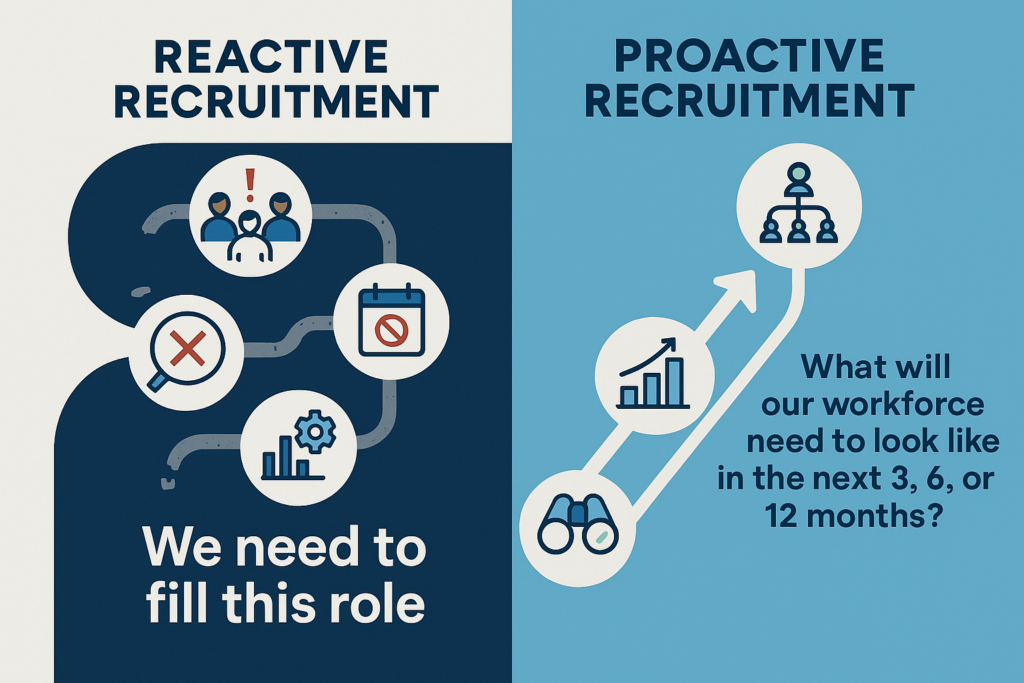
Why Reactive Recruitment Is Costing Organisations?
If you ask most organisations how their recruitment works, the answer is usually simple: “We recruit when there’s a vacancy.”
On the surface, that makes sense. A role becomes vacant, a process is triggered, and the role is filled.
But recruitment isn’t just about filling roles. It’s about protecting capacity, maintaining performance, and planning ahead. When it becomes reactive, the impact is often wider than expected.
Reactive recruitment tends to show up as ongoing pressure rather than one clear issue. Teams operate below capacity for longer, reliance on temporary workers increases, hiring managers become frustrated, and candidates drop out of slow or unclear processes.
Individually, these can feel manageable. Together, they affect delivery, morale, and cost, both financially and operationally.
Most organisations don’t set out to be reactive. It usually happens because workforce planning isn’t aligned to demand, recruitment is involved too late, or data isn’t being used to anticipate gaps.
In more complex environments, governance can also slow things down at the point where speed matters most.
The impact doesn’t just sit with recruitment teams. It spreads across the organisation. Managers spend more time firefighting, teams stretch to cover gaps, and short-term solutions become long-term fixes.
Over time, this leads to reduced productivity, increased contingent spend, and missed opportunities to build sustainable talent pipelines.
A more effective approach starts earlier. It focuses on visibility of workforce demand, using data to identify risks, and building pipelines before roles become critical.
It’s not about making things more complicated. It’s about being more intentional.
The shift is simple:
From “We need to fill this role”
To “What will our workforce need to look like in the next 3, 6, or 12 months?”
Reactive recruitment isn’t unusual. But left unchallenged, it quietly increases cost, pressure, and risk.
Taking a more proactive approach doesn’t require a complete overhaul. It starts with asking slightly different questions, earlier. Speak to Dobson Consulting Today!
Where does your organisation stand?
The Recruitment Health Check takes a few minutes and shows you where an experienced pair of eyes would look first in your hiring process, with one practical thing to examine in each area. Try it here, or talk it through on a free 20-minute call.